The Crumb Test: Gluten-Free Pizza Bases That Actually Hold Their Own
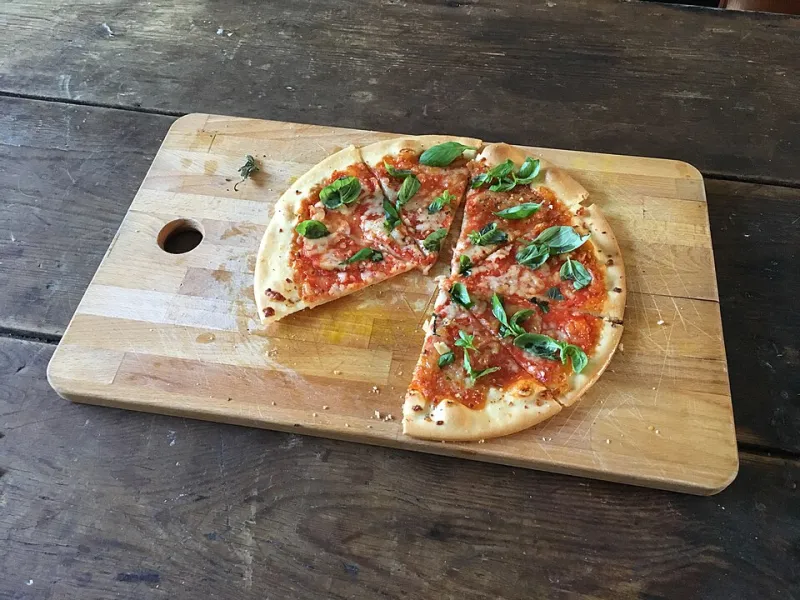
Photo: Thesatirechap, CC BY-SA 4.0, via Wikimedia Commons
Ask anyone in a mixed household about gluten-free pizza and you'll get the same look — a small, resigned tightening around the eyes, usually followed by the words "it's fine, honestly". It is rarely fine. It is usually a pale, chalky disc with a texture somewhere between a ryvita and a bath mat, eaten politely while everyone else's crust blisters and puffs and smells of actual bread.
That's beginning to change. Not everywhere, and not reliably, but enough that gluten-free pizza in Britain in 2026 is now a genuinely interesting corner of the scene rather than a box-ticking exercise. Here's what's going on, and how to get the best out of it.
Why most gluten-free bases fail
Gluten does two jobs that nothing else does quite as well. It stretches, which lets dough trap gas and rise, and it sets, which gives the finished crust its chew and its structure. Take it away and you're left trying to build a crust out of starches that want to do neither.
That's why so many gluten-free bases lean heavily on rice, potato and maize starch. Those flours are brilliant at going crisp and terrible at staying that way. Bake a base and it's fine for four minutes; let it cool and it turns chalky, and if it's sitting under a wet sauce it goes gluey in the middle while the edges quietly shatter. It's not a flavour problem. It's an engineering problem.
The bases that work solve it with one of two strategies. Either they load in binders — xanthan gum, psyllium husk, sometimes egg white or milk powder — to fake the elasticity gluten would have given them, or they accept that the base won't be Neapolitan and go deliberately thin and crisp instead. Both are valid. Thin-and-crisp is the more reliable bet in a domestic oven.
Reading the shelf like a sceptic
Supermarket free-from aisles have improved enormously, but the labelling still needs a second look.
"Gluten-free" is a regulated claim. In the UK it means 20 parts per million or less, and it's the wording a coeliac needs to see. "No gluten-containing ingredients" is not the same thing at all — it's a statement about a recipe, not a guarantee about a kitchen, and Coeliac UK is consistently clear that it isn't interchangeable. If someone at your table has coeliac disease, that distinction is the whole ball game.
Beyond the badge, check three things. First, oil content: a base with a decent amount of olive oil in it browns and crisps rather than drying out. Second, sugar — it surprises people how much of it ends up in free-from bread, and in a thin pizza base it just means scorched edges before the middle has cooked. Third, base weight. A 150g thin base in a hot oven is a far better bet than a 250g thick one, which will almost certainly be raw in the centre by the time the crust is done.
Frozen bases are unfairly maligned. Several are better than the chilled ones, largely because freezing doesn't hurt a dough that never had a living gluten network to lose.
Oven strategy for a base that fights back
This is where gluten-free pizza is won or lost, and it's where most home cooks give up.
- Preheat properly. A steel or stone in a 250–260°C oven, for a full 45 minutes. Gluten-free dough needs a hard, fast blast of heat because it has no elasticity to fall back on.
- Bake on parchment for the first few minutes, then slide it off onto the hot surface. Gluten-free dough hates loose flour on a peel; it sticks, it tears, and the whole thing ends in swearing.
- Bake the gluten-free one first, before anyone has dusted semolina or normal flour anywhere near the oven. Airborne flour settles, and a coeliac diner shouldn't be relying on your kitchen's air currents.
- Dry your mozzarella. Block mozzarella, torn and patted with kitchen paper, releases far less water than the pre-grated stuff. On a normal base that water is a nuisance; on a gluten-free base it's fatal.
- Reduce the sauce. Cook it down for ten minutes so it's thick rather than pourable. You want a smear, not a flood.
- Rest it on a rack, not a plate. A plate traps steam underneath and undoes every good decision you made in the previous twenty minutes.
Losing the soggy middle
The single most common complaint about gluten-free pizza is the grey, damp patch in the centre — and it's almost always caused by piling wet things onto a base that can't cope.
Three fixes, in order of effectiveness. Par-bake the bare base for three to four minutes before topping; go lighter on sauce than you think you should; and finish under the grill for a final minute at the very top of the oven to drive off surface moisture. A quick blitz of high heat at the end rescues bases that a long bake would only dry out.
The high street, honestly assessed
Chain pizza has a reputation for treating gluten-free diners as an administrative inconvenience — a frozen base pulled out of a separate box and charged extra for the privilege. Some of that reputation is earned.
But it's no longer universal. Pizza Express has held Coeliac UK accreditation for its gluten-free offering for years, and it shows in the procedure rather than the marketing: separate prep, separate utensils, staff who can actually answer the question. A handful of other chains now run similarly formal processes. Meanwhile a growing number of independent pizzerias will make a gluten-free base on request — usually a bought-in one, sometimes a very good one — but procedures vary enormously from kitchen to kitchen.
So ask. And listen to how the answer sounds. "We do a gluten-free base" is a menu statement. "The base goes on its own screen, we use a separate cutter and a separate sauce pot, and it's baked in the top oven" is a procedure. The second answer is the one that tells you somebody has thought about it.
What matters just as much is how it's served. A gluten-free pizza that arrives on its own sad plate with a solemn announcement, at a £3 surcharge, makes the person eating it feel like a problem. A gluten-free pizza that looks like everyone else's, costs the same, and is simply put down in front of them is the whole point of hospitality.
The mixed-household service plan
Two peels, two trays, one dinner. Bake the gluten-free base first and keep it warm in a low oven while the rest go in — it reheats far better than it cooks twice. Keep the cutter separate and don't be squeamish about it; a second pizza wheel costs £8 and settles the matter permanently.
And give the gluten-free base a fair fight on toppings. If everyone else is getting a proper, well-seasoned, generously topped pizza and the free-from one is getting a plain smear of passata and a pinch of cheese, then of course it tastes like cardboard. It's being treated like cardboard. Give it the same olives, the same chilli honey, the same good mozzarella — and it will more than hold its own.